
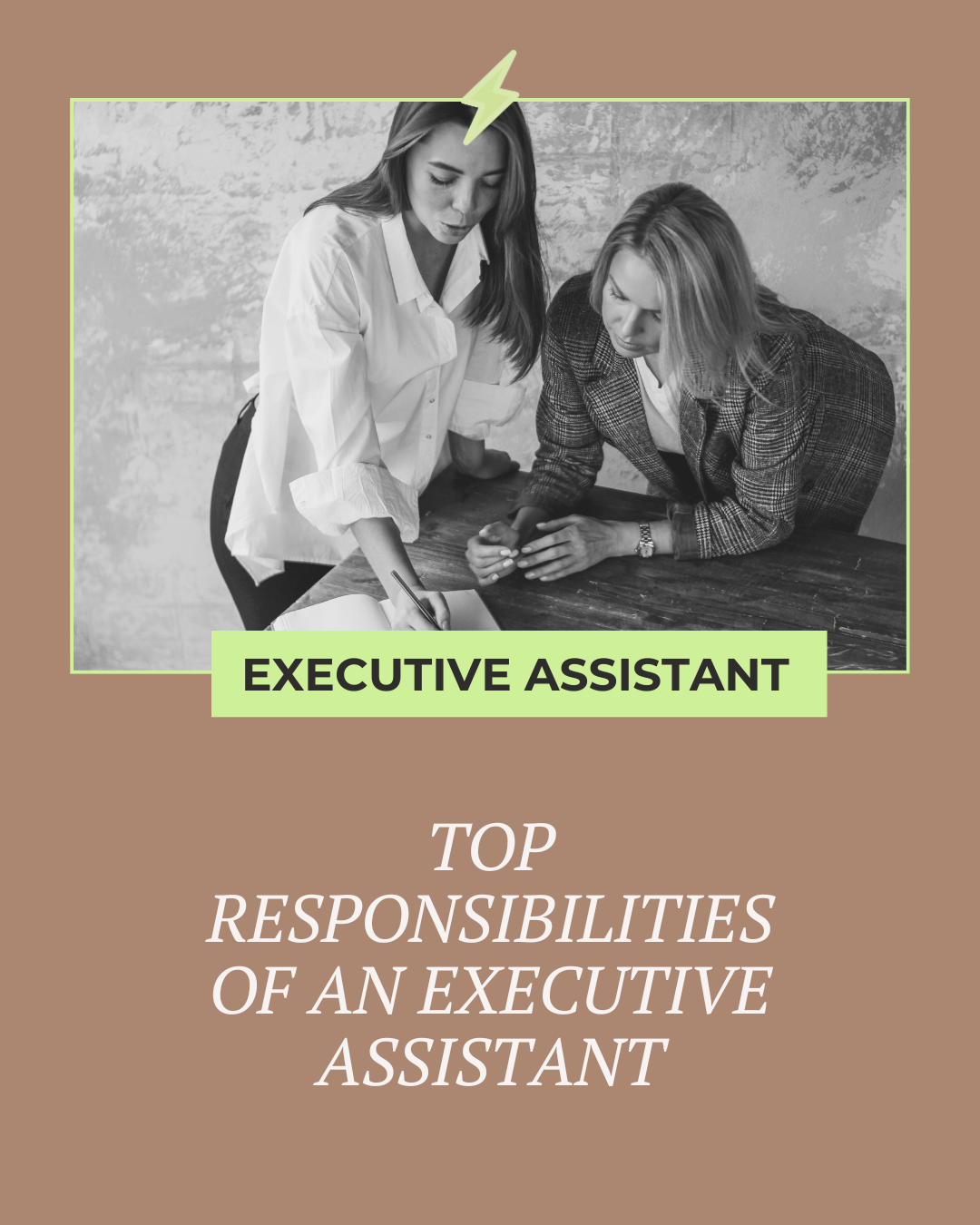
Top responsibilities of an executive assistant
If you’ve ever felt like your day is getting hijacked by emails, scheduling chaos, and constant context switching, you’re not alone. This is exactly where understanding executive assistant duties becomes critical.
A great executive assistant isn’t just handling admin work. They’re actively protecting your time, increasing your output, and keeping your business moving when things get messy.
Let’s break down what this role actually looks like today, because it’s a lot more strategic than most people think.
Understanding the executive assistant role
Definition of an executive administrative assistant
An executive administrative assistant is a high-level support professional responsible for managing day-to-day operations, communication, and logistics for a business leader or executive team.
Unlike a general admin, their work sits closer to decision-making. They’re not just executing tasks - they’re anticipating needs, prioritizing what matters, and often acting as a gatekeeper to the executive’s time and energy.
Importance of executive assistants in organizations
At a certain point in your business, your bottleneck becomes you: your time, your decisions, your attention. This is where an executive assistant changes the game.
If you’ve ever read about how CEOs manage their time effectively, delegation and inbox control are always part of the equation, and often driven by an EA
Executive assistant job description
The executive assistant job description has evolved a lot over the last few years. It’s no longer just calendar management and booking travel.
Today’s executive assistant job scope often includes acting as a communication filter between the executive and team, managing operational workflows, supporting project execution, and handling sensitive information with discretion.
Key attributes of an effective executive assistant
The best executive assistants tend to have good judgement. This includes strong decision-making instincts, high attention to detail, proactive communication, and ability to prioritize under pressure.
Common misconceptions
This is where people get it wrong.
They think hiring an executive admin assistant means offloading “small tasks” or that they need an executive-level role to get operational relief. But, if that’s how you approach it, you’ll never actually free up meaningful time.
Learn more: The Ultimate Checklist: Things to Consider When Hiring a Remote Executive Assistant
Executive assistant duties
There are lots of potential duties for executive assistants. Let’s run through some of the most common ones.
Calendar management and scheduling
This is the most obvious one, but also the most underrated. A strong EA can help you design your calendar around how you actually work best.
That can include blocking time for deep work, grouping meetings to avoid context switching, and helping you pare down how you spend your time.
Email and communication management
Inbox management is one of the highest ROI executive assistant duties.
They can triage emails into urgent vs non-urgent, draft or send responses, flag which emails require your attention the most promptly, and set up better email systems like filters, labels, and systems.
Even just removing 30-60 minutes of inbox work per day creates massive leverage over time - think about what you could do with another 3-5 hours per week!
Travel arrangement coordination
This goes way beyond booking flights. An EA handles full itinerary planning, time zone coordination, and thinking through backup plans when things inevitably change.
Project management and oversight
This is where the role starts to feel more like operations.
Many executive assistants track deadlines and deliverables, following up with team members as needed and keeping projects moving.
They become the connective tissue between ideas and execution.
Financial administration support
While they’re not your bookkeeper, many executive assistants support financial workflows.
This can include tracking expenses, paying invoices, and more.
Think of this as keeping the operational side of money organized, making accounting easier.
Skills required for success
Essential skills for executive admin assistant
If you’re hiring for this role, these are non-negotiable roles we’d consider:
Organization and time management
Strong written and verbal communication
Familiarity with online collaboration tools
Ability to multitask without losing accuracy
Soft skills that enhance executive support
This is what separates average from exceptional.
Looking for someone with emotional intelligence, anticipation of issues, and ability to stay calm under pressure or with ambiguity, is critical.
This is how you find someone who can run with things and really take work off of your plate.
If you’re thinking about hiring an EA, here’s the truth: the real value is you get back in time and bandwidth.
And this role is only getting more strategic.
With more remote work, more tools, and faster-paced businesses, executive assistant duties are shifting toward operations, systems, and even light strategy. The best executive assistants today look a lot like fractional operators.
If you’re at the point where everything depends on you, this is usually one of the highest leverage hires you can make - and if you’re not sure where to start, that’s exactly the kind of thing we help clients figure out every day.
